
TYLENOL® Efficacy
Proven, effective pain relief in a wide range of conditions and patients
The analgesic efficacy of TYLENOL® has been well supported by clinical studies
Shown to be as effective as the maximum OTC dose and Rx dose of ibuprofen in osteoarthritis (OA) of the knee1*
Delivered comparable pain relief to ibuprofen for sprains and strains2
Efficacy in pain management at 1000 mg and 650 mg doses shown in post-operative dental pain studies3
Analgesic Efficacy in Osteoarthritis (OA)
At 4 weeks, acetaminophen was shown to be as effective as ibuprofen for short-term, symptomatic treatment of OA pain of the knee1
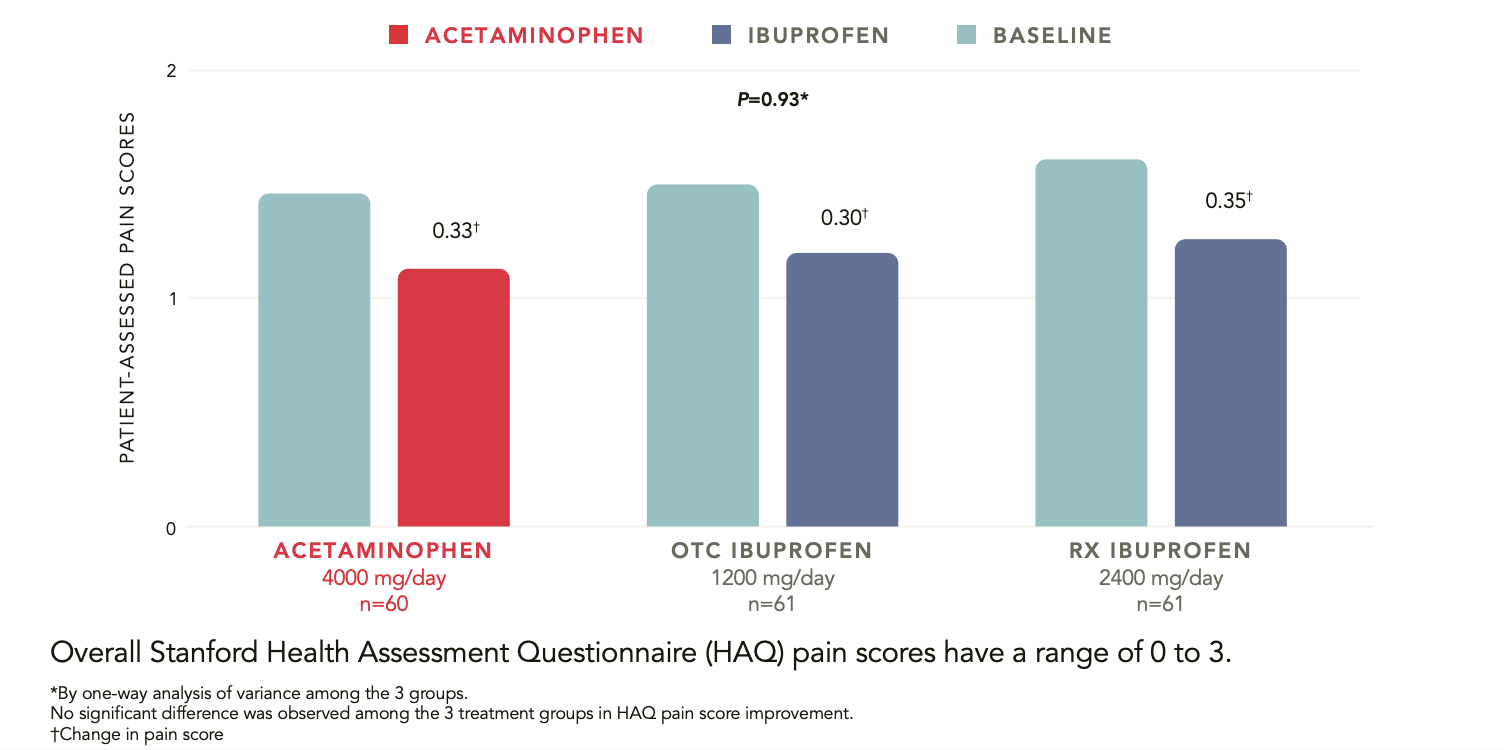
Overall Stanford Health Assessment Questionnaire (HAQ) pain scores have a range of 0 to 3. By one-way analysis of variance among the 3 groups. No significant differences were observed among the 3 treatment groups in HAQ pain score improvement.
Study Design
Randomized, double-blind
184 patients with chronic grade 2 (mild) or grade 3 (moderate) OA knee pain
Mean age: 55 to 57; 71%-79% female
Groups: acetaminophen 4000 mg/day, ibuprofen 1200 mg/day, or ibuprofen 2400mg/day
4 weeks
Outcome measures: HAQ pain scores, et al
Analgesic Efficacy in Sprains and Strains
Acetaminophen extended-release 3900 mg/day: comparable to ibuprofen 1200 mg/day for grade I or II lateral ankle sprains2
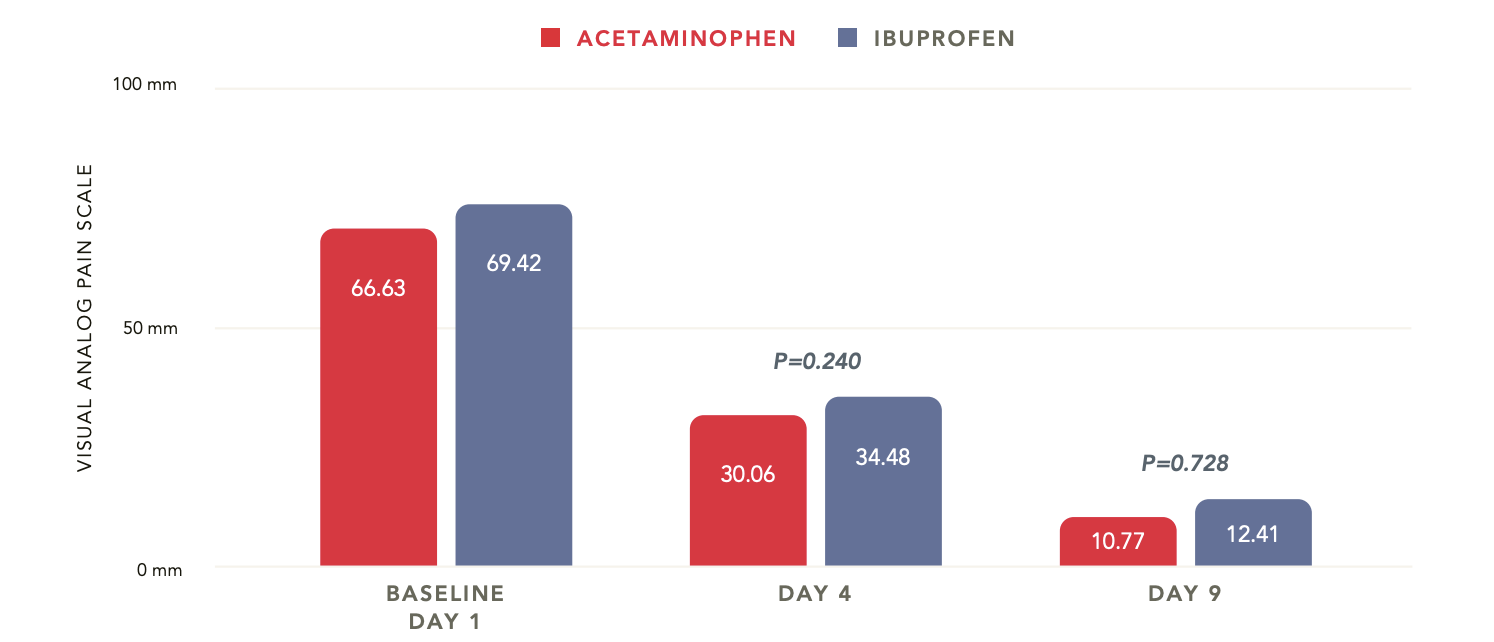
Figure represents the mean pain on walking, as assessed using the Visual Analog Scale (VAS) in the intent-to-treat analysis. The primary endpoint was the change in pain on walking from baseline at day 4 and the change from baseline on day 9 in pain on walking was one of the secondary endpoints. These endpoints demonstrate that there were no significant differences between acetaminophen extended-release and ibuprofen, in change from baseline to day 4 and from baseline to day 9 for pain on walking.
Study Design
Randomized, controlled, noninferiority trial
260 patients with grade I or II lateral ankle sprains
Ages: ≥18 years
Groups: acetaminophen 3900 mg/day or ibuprofen 1200 mg/day
9 days
Primary endpoint: change from baseline at Day 4 in pain on walking
Analgesic Efficacy at 1000 mg & 650 mg
Efficacy in pain management at 1000 mg and 650 mg doses shown in post-operative dental pain studies3
Sum of pain relief and pain intensity difference after dental extraction from baseline at each time point
P<0.001 for TYLENOL® 1000 mg vs placebo P<0.001 for TYLENOL® 650 mg vs placebo
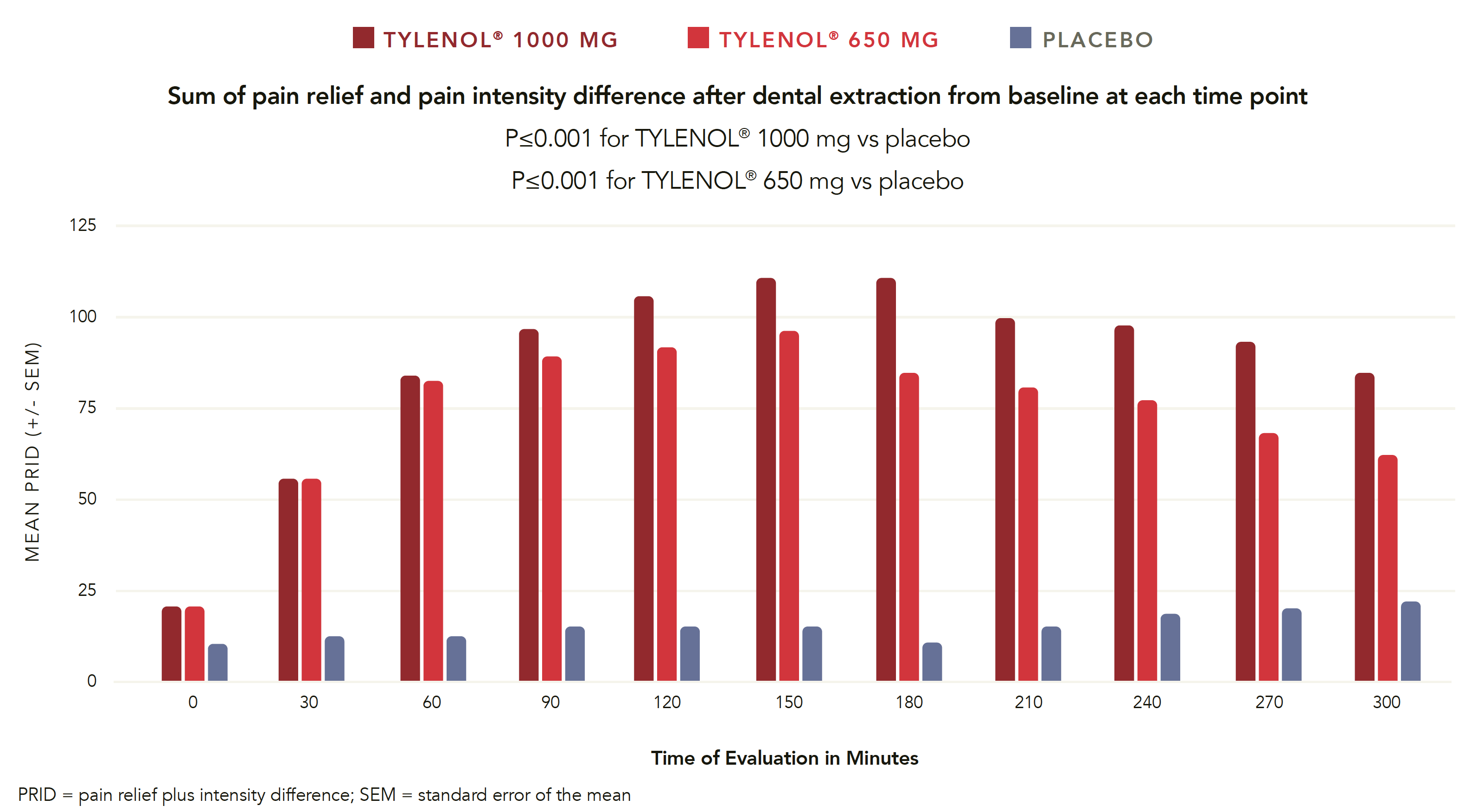
OTC=over-the-counter; PRID=pain relief plus intensity difference; SEM=standard error of the mean
Study Design
Randomized, double-blind, placebo-controlled, single-dose study
540 patients after surgical removal of impacted third molars
Pain level: at least moderate; score ≥50 on Visual Analog Scale (VAS) (0 to 100 mm)
Groups: acetaminophen 1000 mg, acetaminophen 650 mg, or placebo
Ages: 16 to 50 years
1 dose
Measures: pain intensity and pain relief over 6 hours (VAS) Adapted from: Qi DS et al. Clin Ther. 2012;34(12):2247-2258.
References
1. Bradley JD, Brandt KD, Katz BP, Kalasinski LA, Ryan SI. Comparison of an anti-inflammatory dose of ibuprofen, an analgesic dose of ibuprofen, and acetaminophen in the treatment of patients with osteoarthritis of the knee. N Engl J Med.1991;325(2):87-91.
2. Dalton JD Jr, Schweinle JE. Randomized controlled noninferiority trial to compare extended release acetaminophen and ibuprofen for the treatment of ankle sprains. Ann Emerg Med. 2006;48(5):615-623.
3. Qi DS, May LG, Zimmerman B, et al. A randomized, double-blind, placebo-controlled study of acetaminophen 1000 mg versus acetaminophen 650 mg for the treatment of post surgical dental pain. Clin Ther. 2012;34(12):2247-2258.